Everything You Need Before Moving to the UAE for Work | Complete 2026 Guide
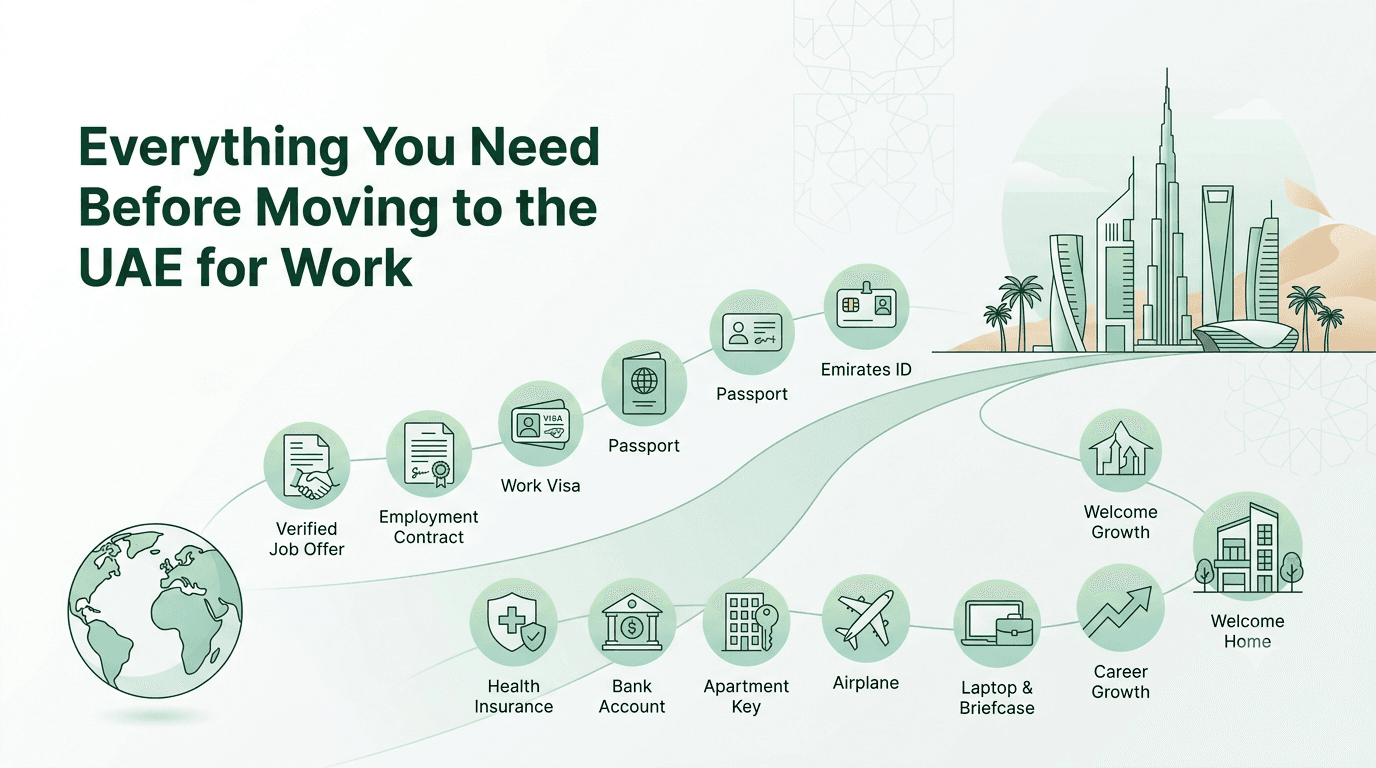
Moving to the United Arab Emirates (UAE) for work is an exciting opportunity. With tax-free salaries, world-class infrastructure, excellent career opportunities, and a multicultural environment, the UAE continues to attract millions of professionals from around the world.
However, relocating to another country requires much more than simply accepting a job offer. Understanding visa requirements, employment laws, cost of living, healthcare, banking, accommodation, and cultural expectations can make your transition significantly smoother.
Whether you're relocating from India, Bangladesh, Pakistan, Nepal, the Philippines, Africa, or anywhere else, this comprehensive guide covers everything you need to know before moving to the UAE for work.
Why Work in the UAE?
The UAE has become one of the world's leading destinations for international professionals because it offers:
- Tax-free salaries
- High demand for skilled professionals
- Modern healthcare facilities
- Safe cities
- Excellent public infrastructure
- International career growth
- Global business environment
- Access to major global markets
- High quality of life
Major employment hubs include:
- Dubai
- Abu Dhabi
- Sharjah
- Ajman
- Ras Al Khaimah
Industries actively hiring include:
- Information Technology
- Healthcare
- Construction
- Hospitality
- Finance
- Logistics
- Retail
- Manufacturing
- Supply Chain
- Education
- Marketing
- Engineering
Step 1: Secure a Genuine Job Offer
Before making any relocation plans, ensure your job offer is legitimate.
A valid UAE employer should provide:
- Official Offer Letter
- Employment Contract
- Company Registration Details
- Visa Sponsorship Information
- Salary Breakdown
- Job Description
- Working Hours
- Leave Entitlements
Always verify:
- Company website
- Business license
- Office address
- Contact information
- Online presence
- Employee reviews
Never pay illegal recruitment fees for a job offer.
Step 2: Understand Your Employment Visa
Foreign nationals generally require an Employment Residence Visa to work legally in the UAE.
The employer usually handles:
- Work permit
- Entry permit
- Medical examination
- Emirates ID application
- Residence visa stamping
Typical documents required:
- Passport
- Passport photographs
- Educational certificates
- Experience certificates
- Police Clearance Certificate (depending on role)
- Medical fitness certificate
Some professions may also require:
- Degree attestation
- Professional licensing
- Embassy authentication
Step 3: Prepare Your Documents
Carry both digital and physical copies of important documents.
Essential documents include:
- Passport
- Employment Contract
- Offer Letter
- Academic Certificates
- Experience Letters
- Birth Certificate (if applicable)
- Marriage Certificate (if relocating with family)
- Vaccination Records
- Passport-sized photos
- Medical records
- Driving License
- International Driving Permit (if applicable)
Store scanned copies securely in cloud storage.
Step 4: Understand Your Salary Package
Many professionals focus only on the basic salary, but the full compensation package matters.
Your package may include:
- Basic Salary
- Housing Allowance
- Transportation Allowance
- Food Allowance
- Annual Air Ticket
- Medical Insurance
- Visa Costs
- Gratuity
- Performance Bonus
- Overtime
- Mobile Allowance
Always ask whether accommodation is:
- Company-provided
- Allowance-based
- Self-arranged
Step 5: Learn About UAE Working Hours
Typical working hours:
- 8 hours per day
- 48 hours per week
Many private companies now operate:
- Monday to Friday
Some sectors may require:
- Shift work
- Weekend work
- Rotational schedules
Employees are generally entitled to:
- Annual Leave
- Public Holidays
- Sick Leave
- Maternity Leave
- Paternity Leave
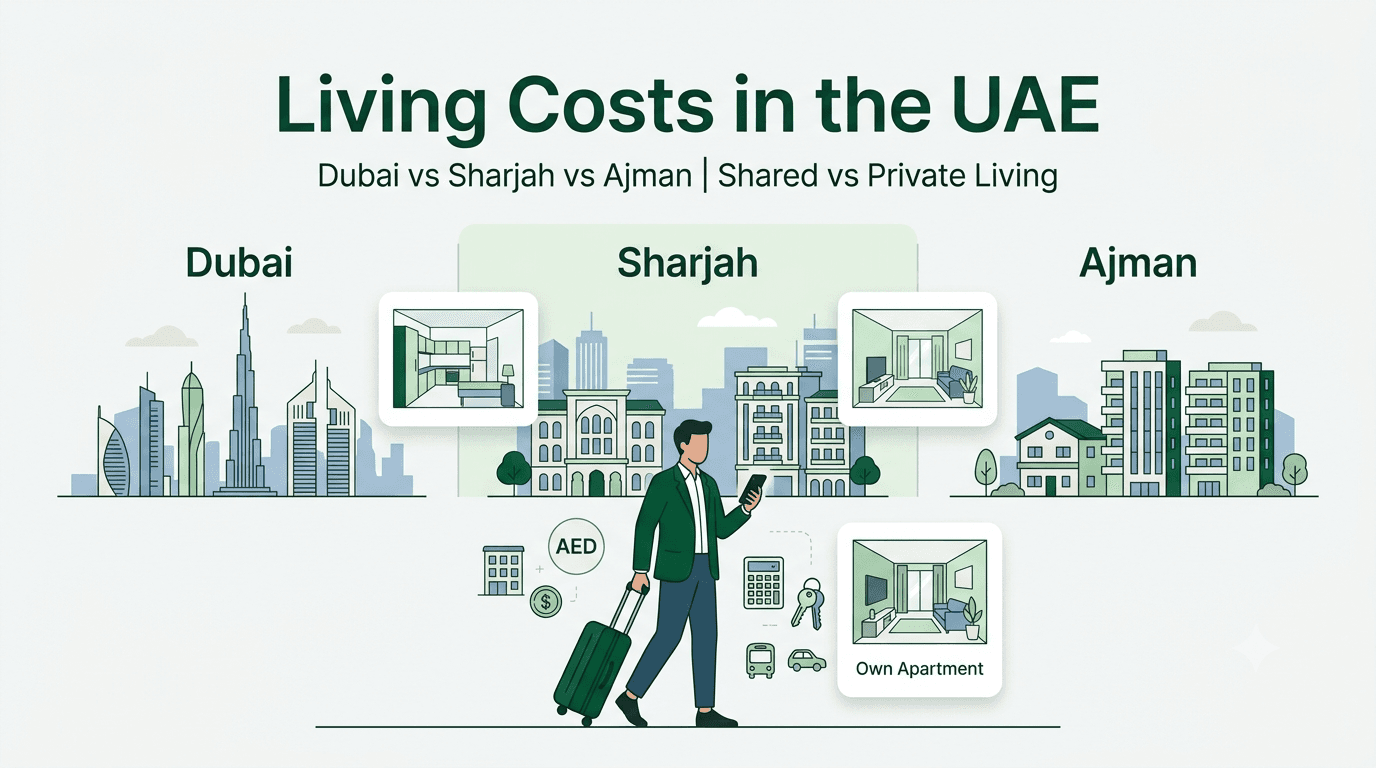
Step 6: Estimate Your Cost of Living
Living expenses vary by city and lifestyle.
Major expenses include:
Accommodation
- Studio apartments
- Shared accommodation
- Family apartments
Transportation
- Metro
- Bus
- Taxi
- Car ownership
Food
- Grocery shopping
- Restaurants
- Food delivery
Utilities
- Electricity
- Water
- Internet
- Mobile plans
Planning your monthly budget before relocating helps avoid financial stress during your first few months.
Step 7: Arrange Accommodation
Some employers provide accommodation.
If not, you can choose:
- Shared apartments
- Studio apartments
- One-bedroom apartments
- Company accommodation
Before signing any rental agreement:
- Verify the property
- Understand lease terms
- Check maintenance responsibilities
- Confirm utility payments
Temporary accommodation may be useful during your first few weeks.
Step 8: Open a UAE Bank Account
Receiving your salary typically requires a UAE bank account.
Documents usually required:
- Emirates ID
- Passport
- Residence Visa
- Salary Certificate
- Employment Letter
Popular banking services include:
- Mobile banking
- International transfers
- Debit cards
- Credit cards
- Savings accounts
Step 9: Obtain Your Emirates ID
Your Emirates ID is one of the most important documents you'll have in the UAE.
It is used for:
- Banking
- Healthcare
- Mobile SIM registration
- Renting accommodation
- Government services
- Employment verification
- Insurance
Always keep it updated.
Step 10: Understand Healthcare
Health insurance is mandatory in many parts of the UAE, and employers often provide coverage.
Medical services include:
- Hospitals
- Clinics
- Emergency care
- Specialist consultations
- Pharmacies
Check your insurance policy to understand:
- Covered hospitals
- Dental benefits
- Specialist referrals
- Prescription coverage
Step 11: Get a UAE SIM Card
Major telecom providers offer prepaid and postpaid plans.
You'll typically need:
- Passport
- Emirates ID (or temporary documents)
A local number helps with:
- Banking
- Job communication
- Government services
- Delivery services
Step 12: Learn UAE Workplace Culture
The UAE workforce is incredibly diverse, with professionals from more than 200 nationalities.
Professional etiquette includes:
- Being punctual
- Respecting cultural diversity
- Dressing professionally
- Communicating respectfully
- Meeting deadlines
- Maintaining professionalism
English is widely used in business, although Arabic is the official language.
Step 13: Understand Local Laws
The UAE has strict laws that everyone should respect.
Important areas include:
- Employment regulations
- Social media usage
- Cybercrime laws
- Financial obligations
- Public behavior
- Driving regulations
Following local laws ensures a safe and positive experience.
Step 14: Prepare Financially
Before relocating, consider bringing enough savings to cover:
- Initial accommodation
- Transportation
- Food
- Deposits
- Personal expenses
Having emergency funds provides peace of mind during your transition.
Step 15: Pack Smart
Bring clothing suitable for both work and the UAE climate.
Recommended items include:
- Business attire
- Casual clothing
- Lightweight clothing
- Important medications
- Power adapters
- Laptop
- Essential documents
- Prescription glasses
Avoid overpacking, as most everyday items are readily available in the UAE.
Step 16: Understand Family Sponsorship
If you plan to relocate with your family, you may be eligible to sponsor:
- Spouse
- Children
- Parents (subject to eligibility)
Requirements typically depend on:
- Salary
- Accommodation
- Visa status
- Documentation
Plan ahead if family relocation is part of your long-term goals.
Step 17: Build Your Professional Network
Networking can significantly enhance your career in the UAE.
Consider:
- Industry events
- Professional associations
- Networking groups
- LinkedIn engagement
- Company events
- Training programs
Strong professional relationships often lead to new opportunities.
Common Mistakes to Avoid
Many first-time expatriates encounter avoidable challenges. Here are some common mistakes to watch out for:
- Accepting a job offer without verifying the employer.
- Signing contracts without reading all terms and conditions.
- Arriving without sufficient emergency savings.
- Ignoring local laws and cultural expectations.
- Failing to prepare or attest required documents.
- Delaying the completion of visa and Emirates ID formalities.
- Not understanding the full compensation package before accepting the offer.
- Sharing personal documents with unverified recruiters.
- Assuming all employers provide accommodation or transportation.
- Overlooking the importance of health insurance coverage.
Being informed and prepared will help you settle into your new role with confidence.
Moving Checklist
Before boarding your flight, make sure you have:
✅ Valid passport ✅ Employment contract ✅ Entry permit or visa documents ✅ Certified educational certificates ✅ Emergency funds ✅ Copies of all important documents ✅ Temporary accommodation (if required) ✅ Travel insurance (if applicable) ✅ Employer contact information ✅ Airport pickup confirmation
How Citizen Can Help
Relocating internationally involves multiple steps, from employment verification and visa processing to payroll setup and onboarding. Managing these processes alone can be challenging, especially if you're unfamiliar with UAE regulations.
At Citizen, we simplify your relocation journey by providing end-to-end Employer of Record (EOR) and workforce solutions for businesses and professionals moving to the UAE and across the GCC.
Our services include:
- Visa and immigration support
- Employer of Record (EOR) services
- Payroll management
- Employment compliance
- Employee onboarding
- HR administration
- Workforce relocation support
- Ongoing HR assistance throughout your employment journey
Whether you're an employer hiring international talent or a professional relocating for a new opportunity, Citizen helps ensure your move is compliant, efficient, and stress-free.
Final Thoughts
Moving to the UAE can be one of the most rewarding decisions of your career. With strong preparation, verified employment, proper documentation, and a clear understanding of local regulations, you'll be well-positioned to succeed both professionally and personally.
Take time to research your employer, understand your employment package, organize your paperwork, and familiarize yourself with life in the UAE before you arrive. A well-planned relocation not only reduces stress but also allows you to focus on building a successful future in one of the world's most dynamic economies.
If you're planning your move or your business is hiring international talent, partnering with an experienced HR and Employer of Record provider can make the entire process smoother and fully compliant.
Written by Al Abdellah
Expert insights on global payroll, compliance, and distributed team management from the CITIZEN EOR team.
Get global HR insights delivered to your inbox
Join thousands of founders and HR leaders staying ahead of global compliance and hiring trends.