The True Cost of Hiring an Employee in the UAE: A Complete Employer Guide
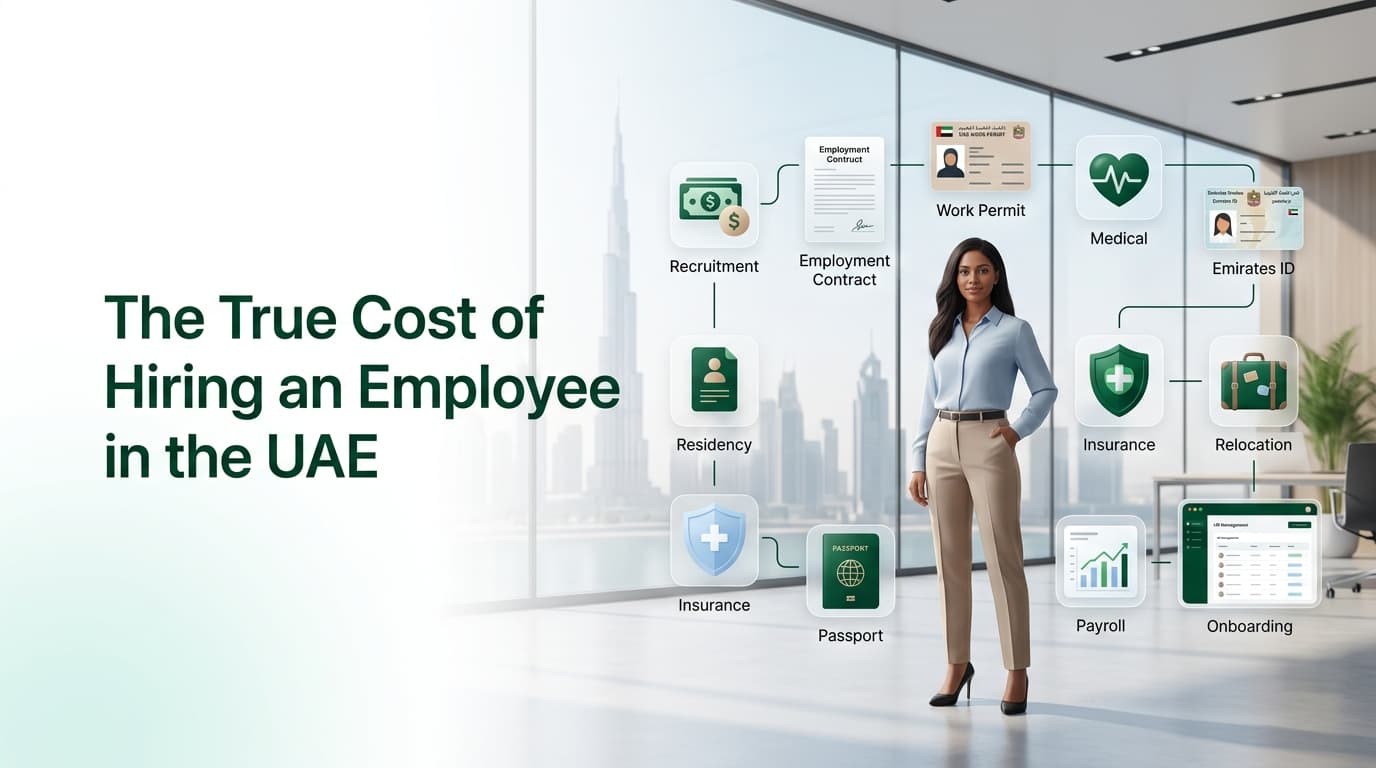
Hiring an employee in the UAE is not just about agreeing on a monthly salary. 🇦🇪
For many businesses, the salary is the most visible part of the employment cost—but it is only one component of the overall investment. From work permits and medical fitness tests to Emirates ID, residency, health insurance, employment contracts, relocation and onboarding, the full cost of bringing an employee into your organisation can be significantly higher than the headline salary.
For HR teams, finance departments, founders and international companies entering the UAE market, understanding these costs in advance is essential. It helps businesses create accurate budgets, avoid unexpected expenses and ensure that employees can start work without unnecessary administrative delays.
In this guide, we break down the major costs and processes employers should consider when hiring employees in the UAE.
1. Start With the Employee's Gross Salary
The first and most obvious cost is the employee's salary.
Depending on the role, industry, experience and location, UAE salaries can vary considerably. Employers should also determine whether the agreed salary is structured as a basic salary plus allowances or as a consolidated monthly salary.
This distinction can matter for certain employment-related calculations, including end-of-service benefits.
However, salary should not be treated as the complete employment cost.
A better budgeting approach is:
Total Employment Cost = Salary + Statutory/Employment Costs + Benefits + Immigration + Insurance + Onboarding + Relocation + Administrative Costs
The exact cost will depend on the employee's nationality, job category, emirate, company structure and employment arrangement.
2. Work Permit and Employment Processing
Before an employee can legally work in the UAE, the employer generally needs to complete the relevant employment and work-permit processes.
Depending on the circumstances, this can involve:
- Work permit processing
- Employment contract documentation
- Labour-related registration
- Government application fees
- Immigration processing
- Status adjustment or entry permit processing
- Professional or qualification documentation where applicable
These costs can vary depending on the employee and employer circumstances.
For international hires, the process can also require additional document preparation and verification before the employee is ready to enter the UAE workforce.
3. Employment Contract and Labour Compliance
A compliant employment relationship requires more than an offer letter.
Employers need to ensure that the appropriate employment contract and related documentation are prepared correctly and that the employment arrangement complies with applicable UAE labour requirements.
This includes understanding:
- Contract terms
- Salary structure
- Working arrangements
- Leave entitlement
- Notice periods
- Probation provisions
- End-of-service obligations
- Employee rights and employer obligations
For HR teams, compliance is not simply an administrative task. Incorrect documentation can create operational, financial and legal risks later.
4. Medical Fitness Testing
For many UAE employment and residency processes, the employee must complete the required medical fitness procedures.
This introduces another cost and another step into the onboarding timeline.
The employer or employee may need to coordinate:
- Medical fitness appointment
- Required testing
- Medical fitness results
- Related immigration processing
For international employees relocating to the UAE, scheduling these steps efficiently is important because delays can affect the employee's joining date.
5. Emirates ID
The Emirates ID is another important part of the UAE residency and employment ecosystem.
The employee's Emirates ID process involves government procedures and documentation and should be incorporated into the overall onboarding plan.
For HR teams, this means the onboarding process does not end when the employee receives an offer.
There is a sequence of administrative steps between:
Offer → Employment Documentation → Work Permit/Immigration → Medical Fitness → Emirates ID → Residency Completion → Employee Onboarding
Planning these stages together makes the hiring process considerably easier to manage.
6. UAE Residency Processing
For employees relocating from overseas, residency processing is one of the most important parts of the onboarding journey.
Depending on the employee's circumstances, the process may involve:
- Entry permit or relevant immigration procedure
- Medical fitness
- Emirates ID application
- Residency procedures
- Status adjustment where applicable
- Immigration documentation
The exact process and associated costs can differ based on the employee's situation and the employer's setup.
For businesses hiring internationally, it is therefore important to budget for immigration-related costs separately from salary.
7. Health Insurance
Health insurance is another major consideration for UAE employers.
Employer obligations can vary by emirate and applicable regulations, but businesses should understand the relevant health-insurance requirements before onboarding an employee.
Beyond compliance, many employers also choose to provide enhanced medical insurance as part of their employee benefits package.
Insurance costs can vary based on:
- Employee age
- Coverage level
- Insurer
- Network
- Geographic coverage
- Additional benefits
- Family coverage
For international talent, a competitive insurance package can also make the overall employment offer more attractive.
8. Recruitment and Hiring Costs
The cost of hiring begins before the employee signs the contract.
Businesses may spend money on:
- Job advertising
- Recruitment platforms
- Recruitment agencies
- Applicant tracking systems
- Background checks
- Candidate screening
- Interviews
- Assessment processes
- HR staff time
There is also an internal cost that is often overlooked.
Every hour spent by HR managers, department heads and finance teams on recruitment represents an operational cost.
For specialist or international roles, the recruitment process can take significantly more time than hiring a local candidate.
9. International Relocation Costs
When hiring internationally, relocation can become a substantial part of the overall employment investment.
Depending on the employer's relocation policy, this may include:
- Flights
- Airport transfers
- Temporary accommodation
- Relocation allowance
- Housing support
- Transportation support
- Initial settlement assistance
- Document preparation
- Family relocation support
Not every employer provides all of these benefits.
However, businesses competing for international talent should consider whether relocation support is necessary to make the offer commercially attractive.
A candidate who is moving to a new country is not simply changing jobs—they are changing their entire living environment.
10. Employee Onboarding
Once the employee has completed the legal and immigration requirements, there is still the internal onboarding process.
This can involve:
- HR orientation
- Company policies
- IT account creation
- Laptop and equipment
- Email setup
- Access cards
- Software licences
- Payroll registration
- Department onboarding
- Training
- Compliance briefings
The cost of equipment and software can be particularly significant for professional and technology-based roles.
For example, a company hiring a software engineer may need to provide a laptop, development tools, software licences and security access before the employee can become productive.
11. Payroll and Employee Administration
Salary payments are only one part of payroll administration.
Employers may also need systems and processes for:
- Payroll calculation
- Salary payments
- Leave management
- Attendance
- Employee records
- Contract management
- Benefits administration
- Compliance reporting
- End-of-service calculations
As the workforce grows, these administrative requirements become increasingly complex.
A company with five employees can potentially manage HR administration manually. A company with 50, 100 or 500 employees needs a much more structured system.
12. End-of-Service and Other Employment Liabilities
Employers should also account for future employment liabilities rather than looking only at monthly expenses.
Depending on the employment arrangement and applicable UAE regulations, these may include:
- End-of-service gratuity
- Accrued leave
- Final settlement obligations
- Notice-period obligations
- Other contractual benefits
These liabilities accumulate over time.
Therefore, finance teams should consider the total employment liability, not simply the monthly salary expense.
13. The Hidden Cost: HR Time
One of the most overlooked costs is internal administrative time.
Consider everything that may happen during one international hire:
Candidate selection → Offer → Document collection → Contract → Immigration → Medical → Emirates ID → Residency → Insurance → Payroll → Onboarding
Each stage requires coordination.
Someone has to:
- Follow up with the candidate
- Review documents
- Coordinate with government or immigration teams
- Track application status
- Communicate deadlines
- Resolve missing information
- Coordinate internal departments
- Complete employee records
For companies without a dedicated HR operations team, these tasks can consume significant management time.
A Simple UAE Hiring Cost Framework
Instead of asking:
"How much salary will we pay?"
Businesses should ask:
"What is our total cost to employ this person?"
A practical framework looks like this:
| Cost Category | Examples |
|---|---|
| Compensation | Salary, allowances, bonuses |
| Recruitment | Advertising, agencies, screening |
| Employment Processing | Work permit and employment documentation |
| Immigration | Entry/residency-related processing |
| Medical | Medical fitness procedures |
| Identity | Emirates ID-related processing |
| Insurance | Employee health insurance |
| Relocation | Flights, accommodation, relocation support |
| Equipment | Laptop, phone, equipment |
| Technology | Software and licences |
| HR Administration | Payroll, HR systems, employee records |
| Benefits | Leave, incentives and other benefits |
| Future Liabilities | Gratuity, accrued leave and final settlement |
The actual amount will depend on the employee's circumstances and the employer's requirements.
Local Hiring vs International Hiring
The difference becomes particularly important when comparing local and international recruitment.
Hiring an employee already in the UAE
The process may be relatively straightforward because the employee is already residing in the country.
The employer may primarily need to manage the applicable employment, work-permit, insurance and onboarding processes.
Hiring an employee from overseas
An international hire can introduce additional layers:
Recruitment → Document Verification → Employment Contract → Immigration → Entry → Medical Fitness → Emirates ID → Residency → Insurance → Relocation → Onboarding
This means the employer needs to consider both financial cost and processing time.
A lower salary does not necessarily mean a lower total hiring cost if the recruitment and relocation process is significantly more complex.
Why Businesses Should Budget for Total Employment Cost
Understanding the complete cost of employment provides several advantages.
Better Financial Planning
Finance teams can create a more accurate annual workforce budget.
Fewer Unexpected Expenses
HR teams can identify government, insurance, relocation and onboarding costs before making an offer.
Faster Onboarding
When documentation and immigration requirements are planned in advance, unnecessary delays can be reduced.
Better Candidate Experience
Candidates are more likely to have a smooth relocation experience when the employer has a structured onboarding process.
Improved Compliance
A properly managed employment process reduces the risk of missing important regulatory or contractual requirements.
Where Citizen EOR Can Help
For companies hiring in the UAE, managing every part of employment administration internally can be time-consuming.
This is where an Employer of Record (EOR) model can simplify the process.
Citizen EOR can support businesses with employment administration, payroll, visa and immigration coordination, compliance and employee onboarding.
Instead of building an entire local HR infrastructure for every new hire, businesses can use an EOR partner to manage key employment processes while they focus on their core operations.
For international companies entering the UAE, this can be particularly useful when they need to hire talent without immediately establishing and managing a complete local employment infrastructure.
The Bottom Line
Hiring in the UAE is more than a salary calculation.
The real employment cost can include:
Salary + Recruitment + Work Permit + Immigration + Medical + Emirates ID + Residency + Insurance + Relocation + Equipment + Payroll + Benefits + HR Administration + Future Employment Liabilities
The exact costs vary from employee to employee, but understanding the complete picture before hiring helps businesses make better financial and operational decisions.
For HR leaders, founders and finance teams, the most important question is therefore not:
"What salary can we afford?"
It is:
"What is the complete cost of employing this person in the UAE?"
When that question is answered early, companies can budget more accurately, plan onboarding more effectively and provide candidates with a smoother employment experience.
Frequently Asked Questions
What is the biggest cost of hiring an employee in the UAE?
For most businesses, salary will remain the largest recurring cost. However, recruitment, immigration, insurance, relocation, equipment and employee benefits can significantly increase the overall cost of employment.
Does the employer pay for the employee's visa?
Visa and employment-related costs can depend on the employment arrangement and applicable UAE requirements. Employers should assess the relevant costs before making an offer.
Is health insurance required for UAE employees?
Health insurance requirements can vary depending on the emirate and applicable regulations. Employers should verify the requirements applicable to their specific employment arrangement.
How long does UAE employee onboarding take?
The timeline varies depending on whether the employee is already in the UAE, their nationality and documentation, immigration requirements and the employer's setup. International hires generally require more planning than local hires.
Can an EOR reduce the cost of hiring?
An EOR does not necessarily make every individual employment cost lower. Its value is in consolidating and managing employment, payroll, compliance, immigration and HR administration, potentially reducing the internal operational burden and infrastructure required by the employer.
What should companies calculate before hiring?
Companies should calculate the total cost of employment, including compensation, recruitment, work permits, immigration, medical procedures, Emirates ID, insurance, relocation, equipment, benefits, payroll administration and potential future employment liabilities.
Build Your UAE Workforce With Confidence
Hiring in the UAE should not be complicated by fragmented HR administration.
Whether you are hiring your first employee in the UAE or expanding an existing regional workforce, having the right employment infrastructure can make the process faster, more structured and easier to manage.
Citizen EOR helps businesses manage employment, payroll, HR, visa and immigration processes across the UAE and wider GCC.
👉 Learn more about Citizen EOR: citizeneor.com
Ready to hire in the UAE? Start with a conversation about your hiring requirements and let Citizen help you understand the employment process from end to end.
Written by Yasser
Expert insights on global payroll, compliance, and distributed team management from the CITIZEN EOR team.
Related Articles
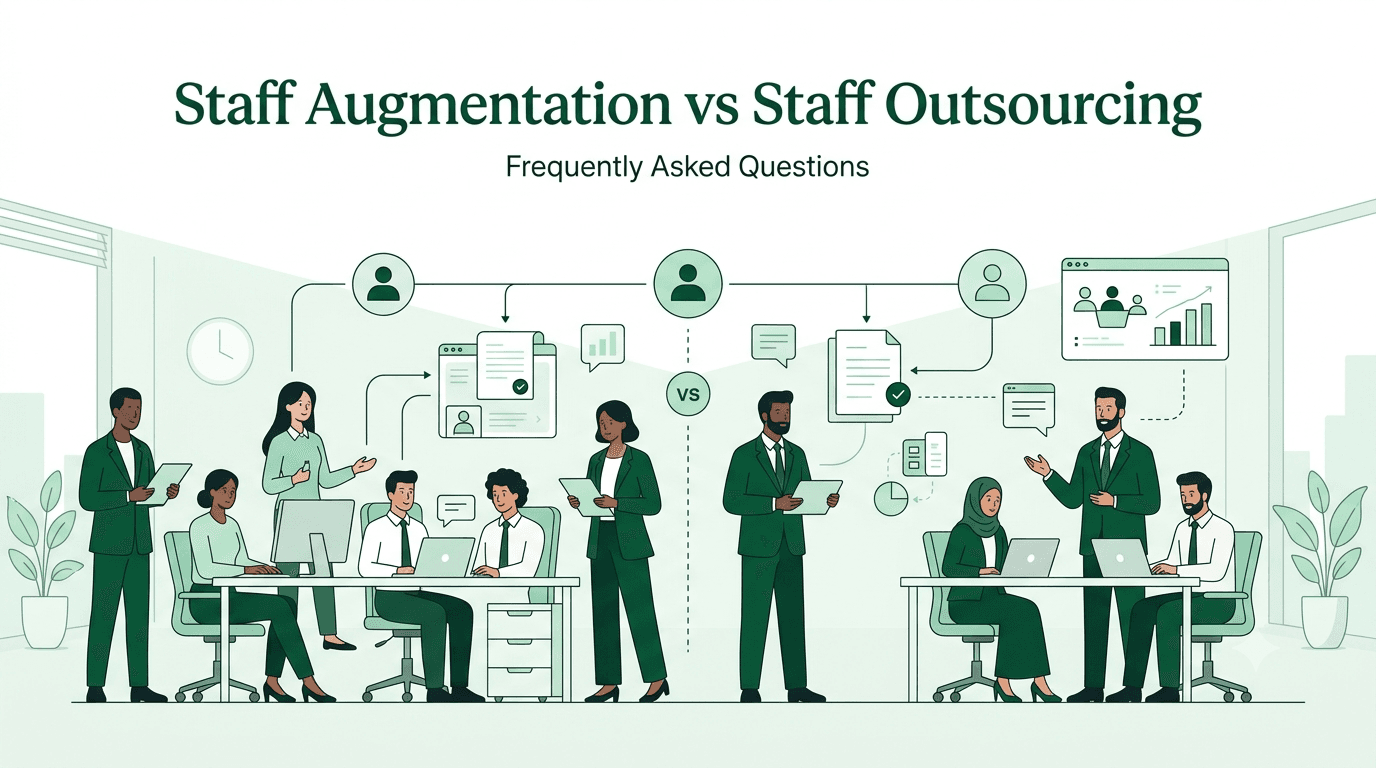
Frequently Asked Questions About Staff Augmentation and Staff Outsourcing
Staff augmentation and staff outsourcing provide businesses with flexible ways to access talent, manage workforce capacity, and improve operational efficiency. While staff augmentation adds skilled professionals to an existing team with greater client control, staff outsourcing transfers responsibility for specific functions or operations to an external provider. Understanding the differences helps businesses choose the right workforce model based on their goals, budget, level of control, and operational needs—particularly when expanding across the GCC.
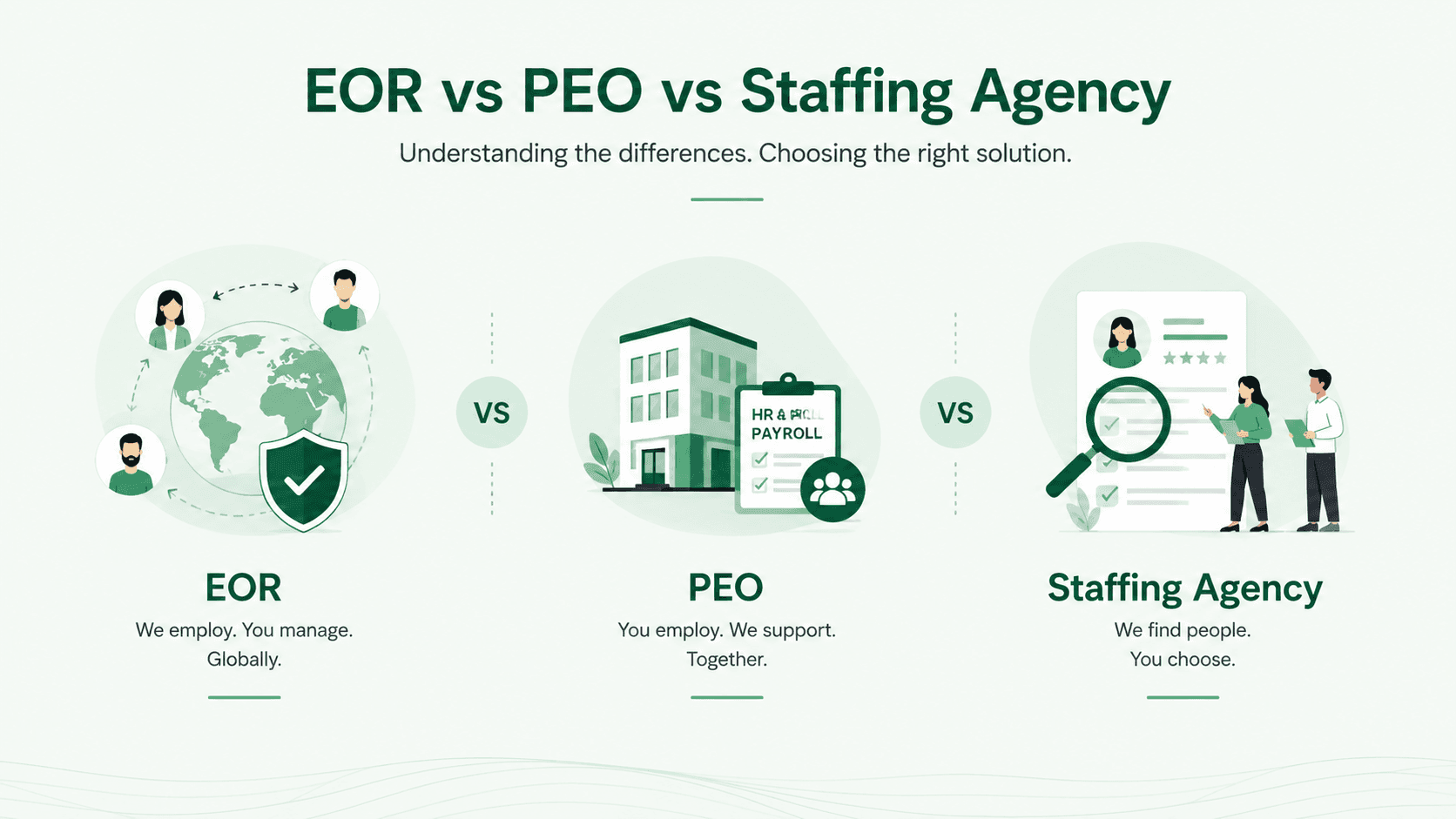
EOR vs PEO vs Staffing Agency: Key Differences Explained (2026)
Understanding the differences between an Employer of Record (EOR), Professional Employer Organization (PEO), and Staffing Agency is essential for choosing the right hiring strategy. While an EOR enables businesses to hire internationally without establishing a local entity, a PEO supports companies that already have a legal presence by managing HR functions. A Staffing Agency, on the other hand, focuses primarily on recruiting temporary or permanent talent. This guide compares each model, highlights their benefits and use cases, and explains how Citizen helps businesses hire globally with compliant EOR, payroll, and workforce solutions.
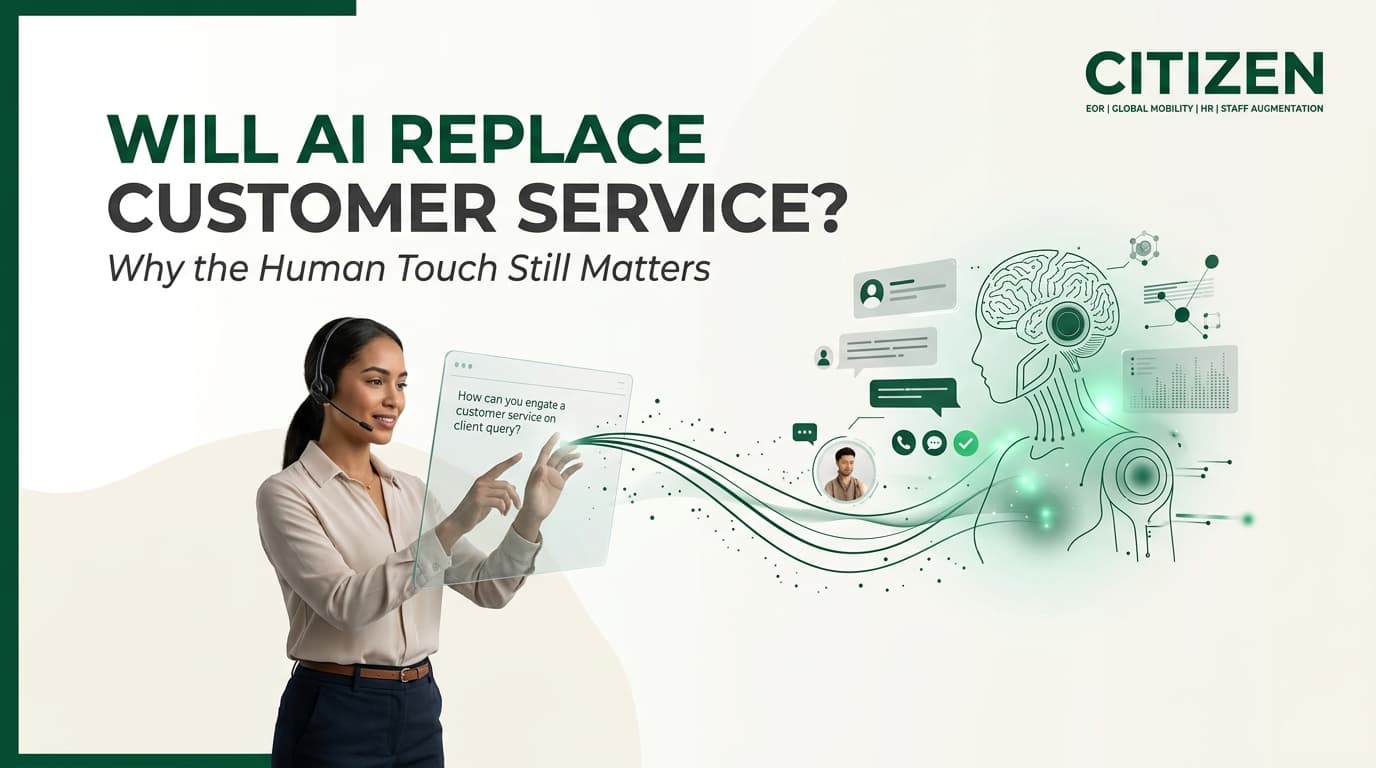
Will AI Replace Customer Service? Why the Human Touch Still Matters
AI is transforming customer service, but does that mean humans are becoming obsolete? From chatbots and automation to complex complaints and relationship management, discover how AI can improve efficiency while human professionals continue to provide the empathy, judgment, and personal connection customers value most.
Get global HR insights delivered to your inbox
Join thousands of founders and HR leaders staying ahead of global compliance and hiring trends.